February 03, 2026
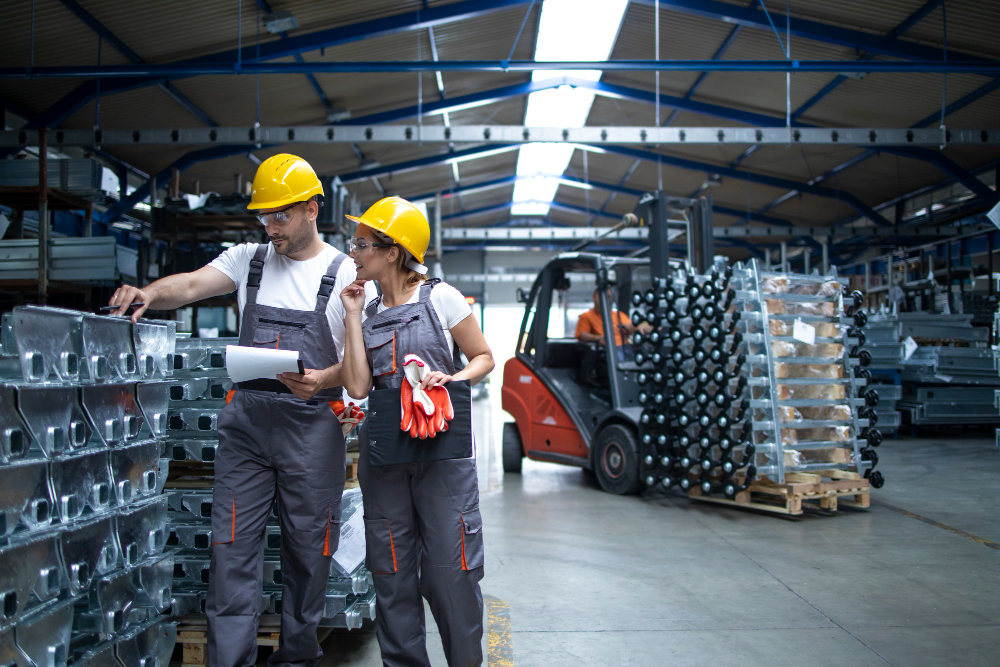
The material used in construction determine the building’s lifespan, the degree of safety, and the cost of long-term maintenance. In the commercial and industrial construction sector, brick, concrete, and timber have been gradually being replaced by steel due to its reliability and efficiency. The steel building materials offer a combination of durability, speed, and robustness that is unattainable in traditional materials. Faster project delivery: Steel is ready to meet current construction requirements and will remain efficient over the long term, providing the structure with the required design flexibility and reducing the risk associated with the business venture and the entire building lifecycle.
In commercial and industrial projects, one cannot simply select a material as a design option; it is a strategic choice. GTI concentrates on providing steel solutions that are balanced in performance, structure, safety, and other life values.
Why Steel Is Becoming the Preferred Construction Material
The construction sector is growing rapidly.
In contemporary commercial projects, materials are expected to meet stringent timelines, safety, and sustainability objectives. Conventional media are usually unable to meet all these requirements simultaneously. There is a compromise between performance, compliance, and long-term efficiency, and the steel building materials provide it.
Do you know? Designers and specifiers will have been aware of the benefits steel offers the construction industry. Steel has taken up over 90% market share in single-storey industrial buildings and single-storey and multi-storey non-residential buildings, respectively, over the last 20 years, thus showing that it has gained a high acceptance in commercial building construction.
Key reasons for this shift include:
- Increasing demands in terms of the completion of projects in a shorter duration.
- Granted, structural performance demands predictability.
- Growing concern with green building.
- Putting more pressure on the large-scale developments in terms of cos
Prefabrication is particularly significant in steel installation, as it shifts much of the labour. This saves time wasted on-site and enhances planning accuracy.
How steel speeds up construction:
The construction acceleration of steel:
- Controlled off-site manufacturing.
- Quick on-site assembly
- There were a few weather-related disturbances.
- Necessitated less labour.
Projects involving steel building materials are likely to be completed sooner, enabling a business to commence operations earlier.
Long-Term Durability and Structural Reliability
The actual value of a building is defined by durability.
Numerous problems have been evaded with steel. It does not rot, cracks not easily, and is not damaged by pests.
Project life span is a question most people concerned with the planning of an industrial or commercial facility ask. Steel buildings can last between 50 and 100 years or more, with fixed construction, design, and maintenance costs, since they last 50-100 years or more under good conditions.
- Resistance to moisture and corrosion (with proper treatment)
- Minimal deformation over time
- High tolerance for industrial loads
- Long service life
Sustainability and Environmental Responsibility
Sustainability has become a necessity, not a choice, in business.
Steel is a highly sustainable construction material today.
The magnetic properties of steel enable it to be easily separated from waste streams, making it the most widely recycled materialin the world. The 1 tonne of steel scrap utilised would save 1.5 tonnes of CO₂ emissions and conserve natural resources such as iron ore, coal, and limestone.
The steel has the following sustainability benefits:
- Recyclable 100%, and without quality impairment.
- Reduced construction waste
- Reduced environmental performance during the lifecycle of the building.
- Green building certifications Support.
Lower Lifecycle Costs and Better Long-Term Value
Initial cost is just one side of the item.
The fact that steel has a long service life and can be reused is also a sign of increasing
market confidence. The structural steel market is projected to grow by USD 30.56 billion between 2023 and 2028, underscoring its role as a cost-effective, future-oriented construction method.
Lifecycle cost benefits include:
- Reduced maintenance specifications.
- Fewer structural repairs
- More rapid construction saves on labour.
- Less complicated upgrades and modifications.
These are some of the factors that guarantee high returns on the investment by commercial developers.
Steel vs Conventional Materials: Key Comparison
This analogy shows the reason why steel has become more popular in the business and industrial sectors.
| Aspect | Steel Building Materials | Conventional Materials |
|---|---|---|
| Structural consistency | High | Variables |
| Construction speed | Fast | Slower |
| Maintenance | Low | Higher |
| Fire resistance | High | Limited |
Why GTI Is a Trusted Name in Steel Solutions
It is as essential as the material chosen to select the proper steel partner. GTI also provides reliable steel solutions that fit contemporary commercial construction.
- Knowledge of steel building materials for commercial use.
- The structural steel materials are of high quality and meet global standards.
- Emphasise power, security, and sustainability.
- Accurate production to achieve quality.
- Solar energy will help deliver projects faster.
Steel building materials, compared to traditional ones, are stronger, quicker to construct, safer, and cost-effective in the long run.
Even without looking further, it is anticipated that the global structural steel business has the potential to grow from USD 114.3 billion in 2025 to USD 182.7 billion by 2035, which further justifies the participation of steel as an asset of the future business and industry.
Got a business project that requires reasonable steel solutions? Learn how GTI can help you realise your building ambitions with high-quality steel building materials.
- FAQs
1. Why are steel building materials preferred over conventional materials for commercial projects?
Steel building materials are also considered good because many of them are stronger, faster to construct, and more durable than concrete or wood. They also reduce long-term maintenance and improve suitability for flexed commercial design requirements.
2. How do structural steel materials improve construction efficiency?
Structural steel materials are manufactured with strict accuracy, enabling on-site construction and reducing construction delays. This will enhance project management and enable commercial buildings to be made ready more quickly.
3. Are steel building materials suitable for large commercial and industrial buildings?
Of course, steel is the most appropriate material when it comes to significant commercial and industrial buildings due to its load-bearing capability, homogeneity, and suitability for crossing over long distances and storeys.
4. Do structural steel materials support sustainable construction practices?
Structural steel materials can be recycled at 100% and used to minimise waste during construction. They are green in terms of durability and reuse potential, as their service life is long and they can be used in environmentally friendly commercial development.
5. How do structural steel materials compare to concrete in long-term performance?
Compared to concrete, structural steel materials are more feasible in addressing the changing commercial demands of fulfilling their needs, owing to higher workability, flexibility, and low costs of lifecycle maintenance.