February 06, 2026
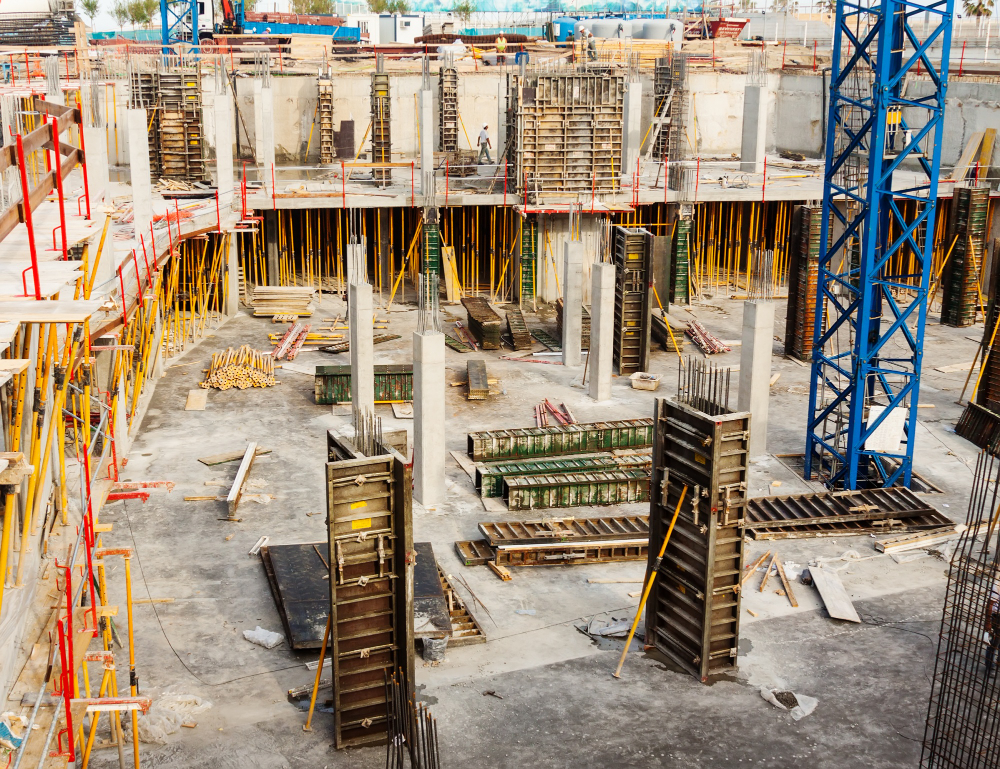
The building materials used today will affect the environment decades later. Climate change has topped the list of global issues, and consequently, the government has been persistent in imposing tighter regulations. No longer a matter of choice, it has become mandatory to use environmentally friendly construction materials that help lower carbon emissions, making good use of available resources, and enhancing the entire lifecycle of buildings. The outcome of this will be innovative materials, such as smarter structures, finishing details, and others, leading to a robust, effective, and progressive infrastructure. It is of paramount importance to any individual engaged in contemporary construction to understand what offers without sacrificing the strength and sociability.
GTI has achieved sustainability through sound engineering and the use of high-quality materials. It has yet to focus on using high-performance solutions aligned with the long-term environmental goals.
Why Environmentally Friendly Construction Materials matter now
It is no longer a question of sustainability or being green. It is on superior buildings, quantifiable, productive, and future-positioned.
The improvements that sustainable choices can have in the following areas include:
- Reduced embodied carbon
- Less embodied carbon (emissions during production and transportation)
- Improved strength, minimising repair and replacement cycles.
- Increased readiness to comply with green tightening.
- Lower toxicity and greater health in the indoor environment.
Do you know? The construction materials used today will determine how long a building remains green over the decades. It is estimated that the building and construction industry accounts for approximately 37% of global CO₂ emissions, and hence, material choice is among the quickest ways to reduce impact on a large scale.
Top sustainable materials that deliver real performance
The following are some of the materials that are popular, easy to obtain, and have been tested to enhance green constructions
1) Recycled steel
One of the materials that should be considered a strong start here is recycled steel, since it performs like new steel and reduces virgin material extraction.
Why it works:
- Unlimited high strength to weight ratio to have an effective structural design.
- Recyclable, as steel can be easily separated and recycled because it is magnetic.
- Embraces zero-waste use in which scrap is converted into products.
Best uses:
- Columns, mezzanines, frames, beams, and industrial frames.
- Multi-storey business buildings and warehouses.
2) Bamboo
The bamboo is gaining momentum due to its ability to be renewed, strong, and, in addition, more modern and construction-friendly.
Do you know? Bamboo is known as the fastest-growing plant on earth, which can grow more than one meter a day. The bamboo reaches full structural strength in just 6 to 9 years, while traditional timber takes from 25 to 75 years.
Why it works:
- Grows to harvestable maturity within a span of 6-9 years compared to the timber, which takes decades.
- Good tensile behaviour of particular applications.
- Grows well in most warm climate areas.
Best uses:
- Panels, ceiling, decorative screening, flooring, interior.
- Using structural and hybrid code systems is permissible.
3) Low-carbon concrete (SCM/blended mixes)
Most construction cannot be done without concrete, but the kind of cement commonly used is a carbon-intensive standard. Blends of low-carbon materials will still lower the impact without affecting structural requirements.
Do you know? Cement is an insignificant material of concrete by its volume, though it has the most significant percentage of up to 90 percent of the total carbon. Replacing some of the cement with supplementary cementitious materials (SCM) is one of the best ways to reduce the carbon footprint of the concrete industry.
Why it works:
- Uses supplementary cementitious materials (SCMs) to avert the CO 2 imprint.
- A good design can help in addressing the weaknesses with a view to improving the service life and durability.
- Frequently does not disrupt the existing building activities very much.
Best uses:
- Slabs, foundations, precast, retaining walls.
- Large individual carbon-saving projects where the volume of the saved carbon goes up exponentially.
How to choose Eco-friendly construction materials for your project
Generally, materials are not suitable for all sites, climates, and budgetary requirements. This checklist is used to make decisions more quickly.
Selection checklist:
- Finish Structure or load-bearing or non-structure?
- Weather conditions: humidity, high temperatures, salty climate, and wind.
- Availability: By sourcing locally, it has reduced transport-related footprint and delays.
- Lifecycle value Durability x maintenance dollar over life.
- Certification requirements: LEED/BREEAM focus areas and documentation development.
Do you know? The sustainable construction materials market is estimated to be worth USD 429.83 billion in 2024, and the growth of the market is expected to hit USD 1,400.77 billion in 2034, which clarifies that the trend of using eco-conscious building is no longer a technical choice of a few individuals but now a common industry in the building sector.
Steel vs Conventional Materials: Key Comparison
A quick list to be used in the initial shortlisting before further engineering examination.
| Material | Sustainability advantage | Where it fits best |
|---|---|---|
| Recycled steel | Highly recyclable, strong, circular-ready | Structural frames, industrial buildings |
| Bamboo | Fast renewable resource | Interiors, finishes, select engineered systems |
| Low-carbon concrete | Reduced CO₂ via SCMs | Foundations, slabs, precast elements |
| Recycled plastic composites | Diverts waste, long-life products | Decking, cladding, site elements |
| Rammed earth | Local material, low processing | Walls, thermal-mass applications |
| CLT (engineered timber) | Stores carbon in the material | Mid-rise structures, floors, roofs |
Practical Ways To Use Environmentally Friendly Construction Materials
Sustainability in construction works when it is viable. Swaps with high impact and low friction should be started with
High-impact steps:
- Recycled steel should be used where possible in structural design.
- Indicate the low-carbon contents of concrete in slabs and foundations.
- Use bamboo or certified engineered replacements of some of the interior finishes.
- Add recycled-content composition elements to the external sites.
- Disassembly and reuse: Designing to ensure materials circulate.
It is not a single material designed to create a more significant future, but rather the appropriate combination applied in the proper places. By focusing on environmentally friendly construction materials, the projects will reduce carbon emissions and waste while providing long-lasting buildings that meet current needs.
Do you want to learn more about how to incorporate environmentally friendly building materials into your new building? Team up with GTI to introduce high-performing, sustainable construction solutions built to be permanent.
- FAQs
1. What are environmentally friendly construction materials?
Environmentally friendly construction materials have an environmental impact because they are eco-friendly, produce minimal pollution, and can be recycled or renewed.
2. What are the reasons for using environmentally friendly construction materials?
They are used to minimise carbon emissions, optimise efficiency, and facilitate long-term building sustainability.
3. What are typical Eco-friendly construction materials?
Recycled steel, low-carbon concrete, bamboo, and engineered timber are some eco-friendly construction materials.
4. Can green construction materials be applicable to commercial projects?
Naturally, there are several green construction materials capable of providing robustness and endurance for large to multi-storey commercial buildings.
5. Why do eco-friendly construction materials support green certifications?
Eco-friendly construction materials help earn points in the certification because of lower embodied carbon and greater recycling.