November , 2026
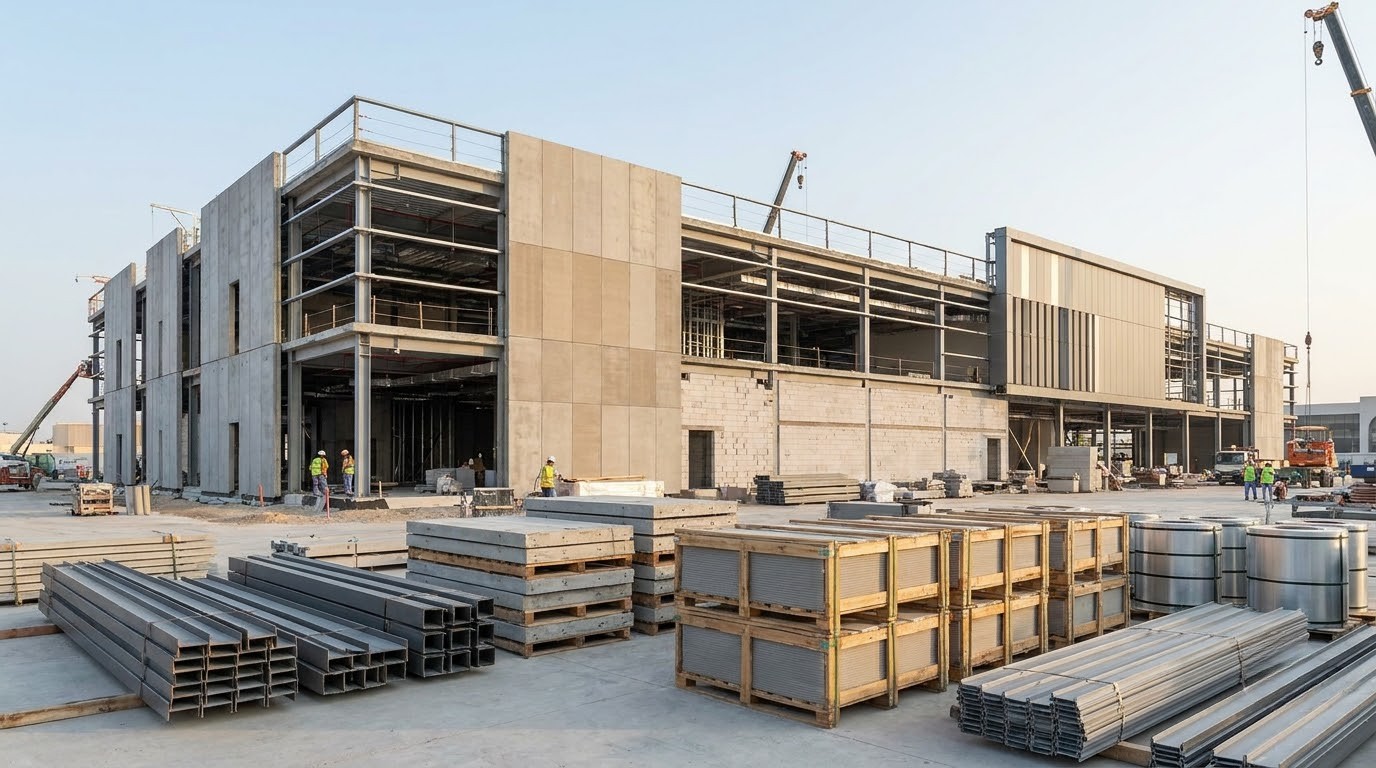
Did you know that the selection of materials can determine whether a commercial construction project is successful? Developers definitely struggle most with managing construction material costs. This issue is made worse by rising prices and an ever-growing demand for dependable, resilient buildings. This problem is aggravated by soaring prices and a constant increase in demand for reliable, resilient buildings. It is indeed true that even the most economical materials can turn out to be costly in the long run if the materials selected are not suitable for the structure and its intended use. Besides fiber-cement boards, steel, and precast solutions, today’s range of building materials also includes materials that help reduce construction periods.
In commercial construction, materials can account for almost half to two-thirds of overall project costs, making them the largest cost element. Sometimes, their share of total project costs can be nearly 50–60% of total project costs. Therefore, controlling expenditure on construction materials to a great extent is definitely more than just a simple cost-reduction approach. It is also a way to improve the project’s overall functioning and secure its ongoing viability.
At GTI, construction material expenses is very important for developers, contractors, and investors. Actually, these costs determine the types of projects that can be undertaken, the earnings generated, and the length of the project.
Why Construction Material Cost Matters in Commercial Projects
Developers, contractors, and investors always prioritize managing the cost of construction materials as they have a great impact on the overall feasibility of the project, profit margins, and schedules.
It is a trick to buy the right building construction materials that strike a balance between initial spending and long-term benefits. Low-cost materials can reduce market costs, but in the end they usually lead to more maintenance and product replacement.
Principal aspects that affect the price of construction materials:
- Material durability and lifecycle
- Availability and transportation costs
- Installation complexity
- Maintenance requirements
The global construction materials market was USD 1,422.30 billion in 2025 and is expected to reach USD 1, 477.50 billion in 2026. Furthermore, it is projected to increase to USD 2, 018.50 billion in 2034, at a compound annual growth rate (CAGR) of 3.9% during the forecast period.
Key Cost-Effective Building Construction Materials to Consider
The global building materials market was valued at USD 1.5 trillion in 2022 and is expected to increase at a CAGR of 4.1% over the next few years. Such growth is primarily driven by rising government expenditure on infrastructure development projects.
Choosing the right building construction materials is one of the best ways to substantially reduce overall building construction costs without diminishing quality.
1. Fiber Cement Boards
Due to their high strength and durability, fiber-cement boards are becoming popular choices for construction material cost. They also do not burn, get damaged by moisture, or attacked by termites.
- They are also resistant to fire, moisture damage, and termites.
- Require minimal maintenance expenses
- Generally last much longer than conventional building materials
The installation of fiber-cement boards reduces expenditures on building construction materials, as they require fewer repairs and replacements.
2. Structural Steel
Steel is a strong and flexible material, and for these qualities it is widely present in commercial buildings.
- Shorter construction periods
- Ability to support heavy loads
- Environmentally friendly due to recycling
While the upfront cost of steel may be higher, it is cheaper in the long run as it consumes less labor and time.
3. Precast Concrete
The precast concrete components are manufactured off-site, and only their installation is carried out on-site.
- Shortened construction periods
- Less expensive labor
- Regular quality
It optimizes spending on construction materials by improving productivity and reducing waste.
4. Lightweight Blocks (AAC Blocks)
Autoclaved Aerated Concrete (AAC) blocks are not only lightweight but also help save energy.
- Better insulation reduces energy costs
- Faster installation
- Lower structural load
They are a very good alternative in the modern building materials category.
5. Metal Roofing and Cladding
Metal roofing systems can be a good long-term investment. Their upfront costs are higher, but they pay for themselves over time by saving you money
- Very strong and durable
- Needs little or no upkeep
- Surface is reflective, helping with energy efficiency
They are a great way to drastically lower your overall operating costs.
Cost vs Performance of Materials
| Material Type | Initial Cost | Maintenance Cost | Durability | Overall Cost Efficiency |
| Fiber Cement Boards | Medium | Low | High | High |
| Structural Steel | High | Low | Very High | High |
| Precast Concrete | Medium | Low | High | High |
| AAC Blocks | Low | Low | Medium | High |
| Metal Roofing | Medium | Very Low | Very High | Very High |
It is indicated here that limiting oneself to initial prices alone can lead to incorrect decisions. Assessing the entire construction material cost in the long run is a more useful measure of value.
How to Reduce Construction Material Cost Effectively
Reducing construction material cost requires strategic planning rather than just selecting cheaper options.
1. Opt for Multi-Functional Materials
To cut down on construction material expenses, a well-thought-out strategy is necessary and not just picking less expensive options.
2. Focus on Lifecycle Cost
One way these fiber-cement boards can double or triple their value is by serving as the walls, ceilings, and outer shell of a building. You’ll be using fewer materials if you do this.
A McKinsey report found average cost overruns of 79% and schedule delays of 52% on capital projects.
3. Minimize Material Wastage
Efficient planning and prefabrication are not only instrumental in reducing waste but also in saving money.
4. Use Locally Available Materials
When you buy from local sources, you not only minimize transport costs but also avoid delivery hold-ups.
5. Partner with Reliable Suppliers
By collaborating with seasoned suppliers like GTI, you will ensure the continuous delivery of high-caliber work while keeping building material costs very low.
Why GTI is the Right Partner for Cost-Effective Materials
At GTI realize how important it is to find the right balance between performance and price.
- Using materials that are top quality and long-lasting
- Providing commercial-project-specific solutions
- Working with modern building construction materials
- Targeting to lower the overall time of construction material cost
Here is how we ensure that each and every project delivers the highest value with no compromises on quality.
Would you like to reduce your construction material costs while maintaining quality? Collaborate with GTI in supplying durable, high-performing construction materials that are perfectly tailored for commercial projects. Contact GTI today and get started building in a more intelligent, faster, and more economical way.
FAQs
1. How can the construction material cost be reduced in commercial buildings?
The use of durable materials, waste minimization, and the consideration of the whole lifecycle costs of materials rather than merely their initial costs are some ways to think about it.
2. Which is the best for reducing construction material costs?
Apart from fiber cement boards, precast concrete, and AAC blocks are also very economical choices.
3. Are modern building construction materials more expensive?
Some materials on the modern building construction list have a higher initial cost, but they can actually save you money over time due to their durability and low maintenance requirements.
4. Why is lifecycle cost important in construction?
It helps break down the total cost of materials for a particular time frame, including maintenance and new purchases.
5. How does GTI help reduce construction costs?
GTI offers tough, reliable, high-performance materials that help customers reduce maintenance costs and enhance the long-term value of their properties.