March 06, 2026
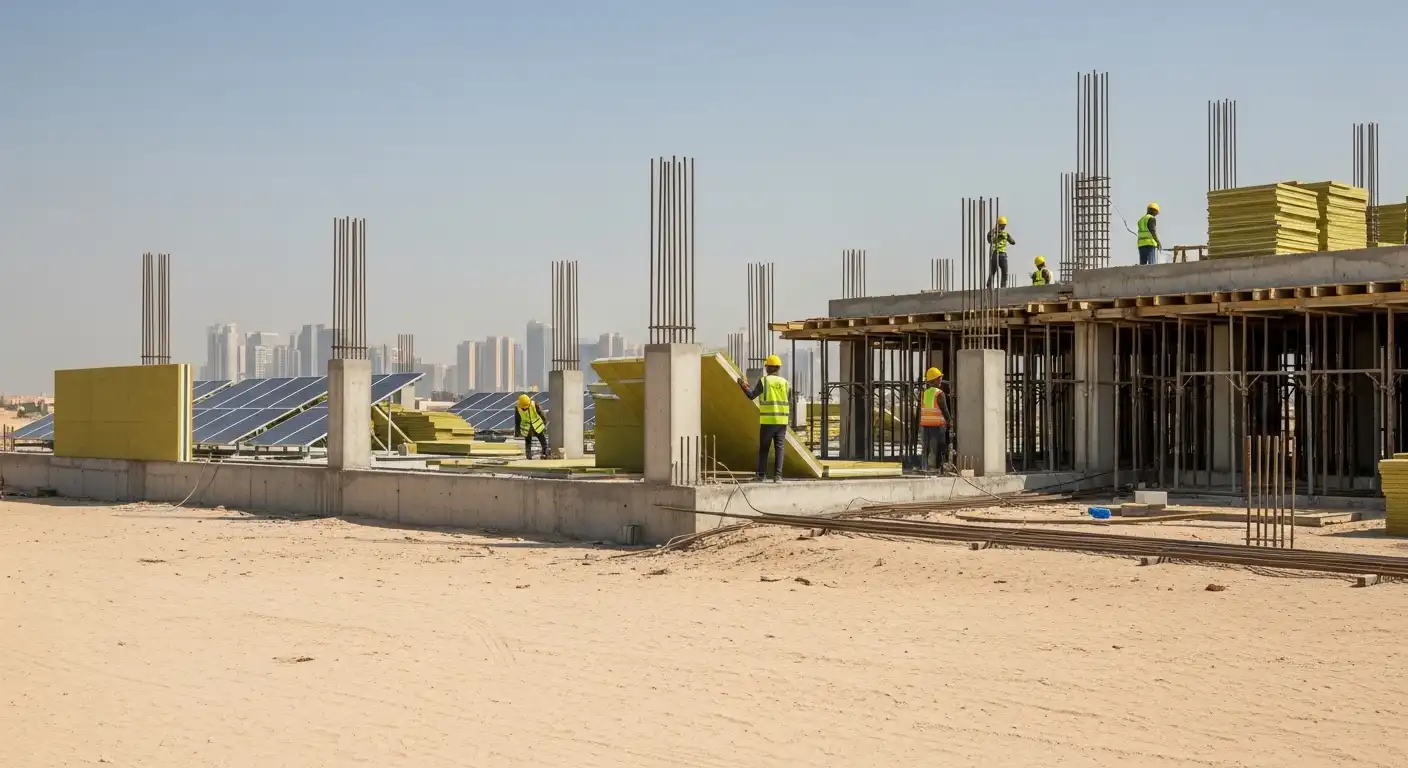
Sustainable building materials transform construction practices across the UAE by reducing environmental impact while meeting modern building standards.
These environmentally friendly construction materials lower carbon emissions, conserve resources, and improve energy efficiency in hot climates.
Developers increasingly choose them to comply with green building regulations and attract eco-conscious clients. This approach supports the UAE’s vision for sustainable development through 2050. Understanding these materials helps contractors make informed choices for future projects.
UAE Green Building Commitment
Government initiatives drive the adoption of sustainable building materials across UAE construction projects. Dubai and Abu Dhabi municipalities require green certifications for new developments. Estidama and LEED standards establish clear benchmarks for environmental performance.
Tax incentives reward developers using low-carbon materials in approved projects. These policies create a steady demand for environmentally friendly construction materials. Long-term regulations ensure green practices become standard rather than optional.
Low-Carbon Concrete Solutions
Low-carbon concrete reduces emissions from traditional cement production significantly. Supplementary cementitious materials like fly ash and slag replace portions of Portland cement effectively.
Geopolymer concrete uses industrial byproducts, creating durable structures with minimal environmental footprint. These options maintain the strength ratings required for high-rise buildings. Production processes consume less energy than standard concrete methods. UAE projects increasingly specify them for foundations and structural elements.
Recycled Steel and Metals
Recycled steel cuts energy use by 75 percent compared to virgin production. Scrap metal processing requires less mining and transportation than new ore extraction. UAE recycling facilities process construction steel waste into high-quality rebar and structural beams.
These materials meet international strength standards while reducing landfill waste. Corrosion-resistant coatings extend service life in coastal environments. Builders achieve sustainability goals without compromising structural integrity.
Bio-Based Insulation Materials
Natural insulation options outperform synthetic products in the UAE climate conditions. Sheep wool absorbs moisture, preventing mold growth in humid areas. Cork boards provide thermal resistance and fire safety naturally.
Cellulose from recycled paper fills wall cavities effectively blocking heat transfer. These environmentally friendly construction materials biodegrade safely at the building’s end-of-life.
Local sourcing reduces transportation emissions, further enhancing green credentials. GTI maintains production in the UAE itself.
Engineered Timber Products
Cross-laminated timber replaces concrete and steel in mid-rise structures successfully. Sustainable forestry certification ensures responsibly harvested wood supplies. Factory prefabrication reduces construction site waste dramatically.
Timber sequesters carbon throughout a building’s lifespan, providing environmental benefit. Fire-retardant treatments meet UAE safety codes completely. Lightweight nature lowers foundation requirements, saving additional materials.
Bamboo and Natural Fibers
Bamboo grows rapidly, requiring minimal water and pesticides for cultivation. Structural bamboo poles provide steel-like strength at lighter weights. Natural fibers reinforce concrete, creating crack-resistant panels.
Coconut coir serves as an effective erosion control and insulation material. These renewable resources regenerate quickly after harvesting. Local availability reduces import-related carbon footprint significantly.
Low-VOC Paints and Coatings
Low-VOC paints eliminate harmful chemical emissions, improving indoor air quality. Water-based formulations dry quickly, supporting tight construction schedules. Anti-microbial additives prevent mold growth in humid UAE conditions.
Reflective coatings reduce surface temperatures, lowering cooling demands. Durable finishes extend repainting interval,s cutting maintenance costs. Color retention withstands intense sunlight exposure effectively.
Green Roof Systems
Green roofs reduce urban heat island effects by cooling surrounding areas naturally. Native plant selection requires minimal irrigation in arid climates. Modular trays simplify installation and future maintenance tasks.
Soil layers provide thermal insulation, blocking heat transfer to interiors. Stormwater retention prevents flooding during rare heavy rain events. Biodiversity benefits support local ecology while meeting green certification points.
Recycled Aggregate Applications
Crushed concrete from demolition becomes road base and non-structural fill material. Glass cullet substitutes for virgin sand in concrete mixes successfully. Recycled aggregates lower virgin material extraction demands substantially.
Processing facilities operate locally, minimizing transportation emissions. Quality testing ensures performance matches natural aggregates consistently. Cost savings benefit large-scale infrastructure projects, particularly.
Modular Prefabrication Benefits
Factory-built modules reduce on-site construction time by 50 percent, typically. Controlled environments ensure consistent material quality throughout production. Waste generation drops dramatically compared to traditional methods.
Sustainable materials integrate easily into prefabricated systems. Transportation optimization lowers overall carbon emissions effectively. Rapid assembly supports accelerated project timelines, meeting developer demands.
Cost Considerations for Green Materials
Initial costs usually exceed conventional materials by 5-15 percent. Long-term energy savings recover premiums within 3-7 years typically. Reduced maintenance requirements and lower lifecycle expenses significantly.
Government rebates offset upfront investments quickly. Bulk purchasing achieves economies of scale for developers. Material availability improves as production scales regionally.
Performance and Durability Standards
Sustainable building materials meet or exceed conventional strength requirements. Fire resistance testing confirms safety compliance completely. Thermal performance exceeds minimum code specifications consistently.
UV resistance prevents degradation in intense sunlight environments. Acoustic properties improve occupant comfort levels noticeably. Warranties match traditional material guarantees, providing contractor confidence.
Regulatory and Certification Requirements
The Estidama Pearl Rating System awards points for sustainable material selection. LEED certification credits multiple green material categories generously. Dubai Green Building Regulations mandate minimum sustainable content percentages.
Abu Dhabi sets similar environmental performance thresholds. Third-party verification confirms material claims objectively. Certification documentation supports project approval processes smoothly.
Supply Chain Improvements
Local manufacturing capacity grows, meeting regional demand steadily. Import substitution reduces transportation carbon footprints substantially. Regional production hubs serve multiple emirates efficiently.
Standardized specifications facilitate material interchangeability. Bulk storage facilities ensure project supply continuity. Manufacturer partnerships guarantee consistent quality delivery.
Future Market Trends
Carbon pricing mechanisms favor low-emission materials increasingly. Net-zero building mandates drive demand growth rapidly. Technological innovations improve material performance continuously.
Circular economy principles extend material lifecycles effectively. Consumer preference shifts toward certified green buildings. Investment flows support expanded production capacity.
Conclusion
Sustainable building materials create environmental benefits while meeting the UAE construction performance standards completely. Low-carbon concrete, recycled steel, bio-based insulation, and engineered timber lead green construction transformation across the Emirates.
GTI supplies quality sustainable products supporting environmentally friendly construction materials for forward-thinking developers. We can do this effectively because we maintain the production locally in the UAE.
Source from us for your next development needs. Here is a link to our contact form.
Frequently Asked Questions
What defines sustainable building materials in the UAE?
Materials reducing carbon emissions, conserving resources, and improving energy efficiency qualify as sustainable.
Which sustainable building materials work best in hot climates?
Reflective coatings, bio-based insulation, low-carbon concrete, and green roofs excel in UAE conditions.
Do sustainable building materials cost more than conventional options?
Initial costs run 5-15 percent higher, but energy savings recover premiums within several years.
What certifications prove sustainable building materials quality?
Estidama, LEED, and third-party environmental product declarations verify green material performance.