July 13, 2026
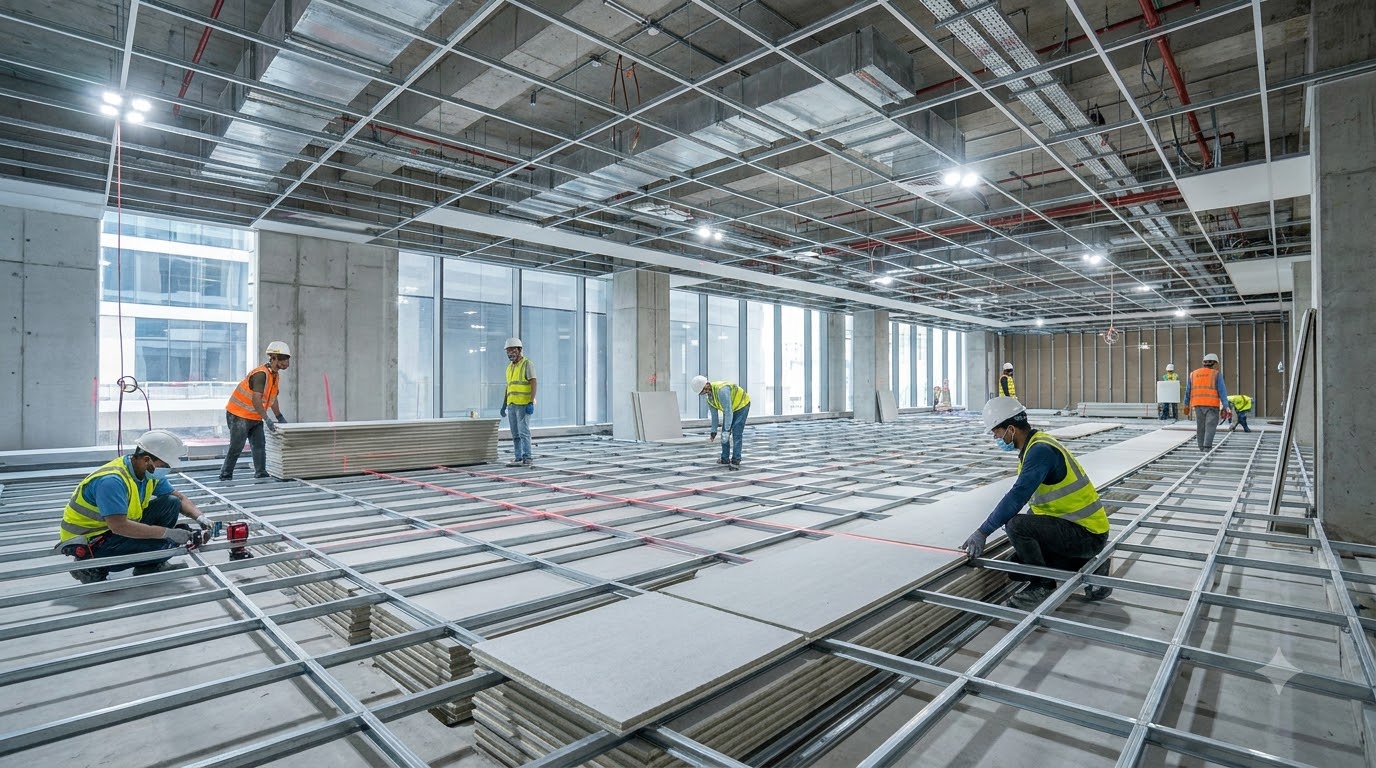
Did you realize that indoor humidity has the ability to decrease the life of poorly installed ceilings despite the use of premium materials? The temperature and humidity in the UAE are also higher, which complicates ceiling installation compared to other areas. This is why adherence to the standard practices for ceiling installation in UAE is a requirement towards sustainability and safety in performance.
In 2022, Civil Defence responded to 2,169 building fires, 2,090 in 2021 and 1,968 in 2020, according to the UAE Ministry of Interior. The gradual growth indicates the significance of implementing quality ceiling systems and adhering to best practices when installing the ceiling systems to enhance building safety.
Whether it is an office, hospital, school, retail space, or residential project, proper installation will help avoid sagging, mould growth, corrosion, and costly repairs. GTI offers quality ceiling solutions that are stable within the UAE’s harsh climatic conditions. This guide outlines the optimal installation procedures, pitfalls to avoid, and professional advice to achieve a long-lasting effect.
Why High Humidity Changes Ceiling Installation Requirements
The UAE climate presents certain challenges to all construction projects. High humidity influences ceiling and supporting structures.
The standard practices for ceiling installation in UAE make buildings durable, safe, and appealing to the eye in the long run.
Moisture Challenges in UAE Buildings
Humidity can cause:
- Ceiling tile sagging
- Metal grid corrosion
- Growth of moulds and mildews.
- Reduced insulation performance
- Cracks at joints
- Shorter ceiling lifespan
The U.S. Environmental Protection Agency (EPA) reports that moisture control must be done promptly, since wet building materials may support mould growth in 24-48 hours.
Why Following Standard Practices Matters
Professional installation helps:
- Extend ceiling life
- Reduce maintenance costs
- Improve indoor appearance
- Maintain fire performance
- Improve occupant comfort
Fire safety also depends on properly installed partition systems. Learn more in our How to Achieve Fire Rated Partition Walls in UAE guide.
Standard Practices for Ceiling Installation in UAE
A successful ceiling project all starts with effective planning. Common standard practices for ceiling installation in UAE revolve around the choice of appropriate materials, site preparation and adherence to manufacturer instructions.
Planning Before Installation
Before installation begins:
- Calculate area effectively.
- Check structural support.
- Confirm HVAC layout.
- Plan lighting locations.
- Identify moisture-prone areas.
- Check local project specifications.
If you require step-by-step installation instructions, our how to install a suspended ceiling in the UAE step-by-step guide shows all steps throughout the construction and finalisation.
For a complete installation workflow, read our Suspended Ceiling Installation UAE: Step-by-Step Contractor Guide, which explains every stage from planning and grid installation to final inspection.
Choose Moisture-Resistant Ceiling Materials.
The choice of materials is significant in the humid climate.
Select goods that provide:
- Moisture resistance
- Corrosion-resistant grid systems
- Fire-rated performance
- Easy maintenance
- Dimensional stability
GTI offers ceiling systems designed specifically for demanding UAE commercial environments.
Where ceiling systems connect with drywall partitions, selecting the right framing is equally important. Read our GI Stud vs Aluminium Stud for Commercial Drywall in UAE comparison to choose the appropriate framing material.
Ceiling Installation Best Practices UAE for Long-Term Performance
The US Environmental Protection Agency (EPA) and the American Society of Heating, Refrigerating and Air-Conditioning Engineers (ASHRAE) concur that the ideal indoor relative humidity should be 30- 60 per cent.
Incorporating correct installation methods is also as important as quality materials. These ceiling installation best practices UAE help improve durability and reduce maintenance.
Install the Ceiling Grid Properly.
The grid supports the entire ceiling.
Always ensure:
- Accurate levelling
- Secure suspension wires
- Correct hanger spacing
- Strong perimeter fixing
- Proper alignment
Even minor errors during installation can result in asymmetrical ceilings in the long term.
Correct hanger spacing is equally important for ceiling stability. Our Standard Hanger Spacing for Suspended Ceilings in UAE guide explains the recommended spacing requirements and installation standards.
Prevent Moisture during installation.
Before ceiling installation, moisture control should begin.
Best practices include:
- Finish wet construction initially.
- Allow plaster to dry.
- Check the proper operation of HVAC systems.
- Store ceiling materials indoors.
- Protect products from rain and humidity.
Numerous contractors also do the process of installing a suspended ceiling step by step in UAE to ensure that moisture protection is taken into account during the installation process.
If your fit-out also includes partition walls, our How to Install Drywall Partition Systems in UAE Commercial Buildings guide explains the correct installation sequence to coordinate drywall and ceiling systems efficiently.
Leave Expansion Gaps
Materials may expand and contract with a temperature change.
Having good expansion gaps prevents:
- Cracking
- Buckling
- Joint failure
- Ceiling distortion
These are some of the standard practices for ceiling installation in UAE as suggested by a qualified expert.
Contractor Ceiling Tips UAE for Better Results
Professional installers understand that minor details can determine long-term performance. These practical contractor ceiling tips UAE can help improve project quality.
Avoid These Common Mistakes
Do not:
- Install ceilings before the building has dried.
- Use damaged ceiling panels.
- Ignore manufacturer spacing.
- Skip levelling checks.
- Mix incompatible components.
- Leave exposed metal unprotected.
Complete Final Checks.
Before handing over the project:
- Inspect panel alignment.
- Check suspension points.
- Verify lighting fixtures.
- Confirm access panels.
- Test ceiling stability.
- Clean the surface.
These contractor ceiling tips UAE prevent future maintenance problems and enhance customer satisfaction.
Recommended Ceiling Systems for High-Humidity UAE Projects
Various types of projects need varying ceiling systems. Selecting the right product enhances durability and appeal.
| Project Type | Recommended Ceiling |
| Hospitals | Hygienic moisture-resistant ceiling |
| Offices | Mineral fibre ceiling |
| Schools | Acoustic ceiling system |
| Retail Stores | Metal ceiling panels |
| Hotels | Decorative suspended ceiling |
| Commercial Buildings | Fire-rated suspended ceiling |
In choosing materials, the combination of quality products with standard practices for ceiling installation in UAE always leads to the best results.
Installation Checklist
Adhering to a basic list of checks assists in quality control of the project.
| Installation Stage | Best Practice |
| Site Inspection | Check humidity and structure |
| Material Storage | Keep materials dry indoors |
| Grid Installation | Ensure perfect level |
| Panel Installation | Handle carefully |
| Expansion Gaps | Maintain recommended spacing |
| Final Inspection | Verify alignment and stability |
These ceiling installation best practices UAE that can minimise defects and enhance ceiling performance.
Why Choose GTI?
GTI provides credible ceiling systems designed for UAE construction projects today.
With extensive industry experience, GTI provides:
- High-quality ceiling systems
- Moisture-resistant solutions
- Fire-rated ceiling products
- Technical installation support
- Products suitable for commercial and institutional projects
Regardless of the type of project you are working on hospital, office, school, or a retail development- adhering to the standard practices for ceiling installation in UAE, along with the quality products of GTI, can ensure long-term outcomes.
One of the largest issues with modern buildings in the UAE is humidity. Contractors can lower maintenance costs and enhance ceiling life by adopting standard practices for ceiling installation in UAE, the choice of quality material and utilization of evidence-based installation practices.
In search of good ceiling solutions in high-humidity environments? GTI has high-quality suspended ceiling systems which are suitable for the requirements of a standard practices for ceiling installation in UAE.
Our moisture-repellent and tough ceiling products contribute to the performance and longevity of commercial, healthcare, education and industrial construction projects. Contact GTI today to find the right ceiling solution for your next project.
FAQs
- What are the common standard practices for ceiling installation in UAE?
They involve appropriate planning, moisture control, appropriate grid installation, appropriate materials, expansion gaps, and final quality checks.
- Why are the standard practices for ceiling installation in UAE important?
They assist in avoiding sagging, corrosion, mould, as well as expensive repairs and enhancing ceiling life.
- What are the ideal ceiling materials in the humid UAE conditions?
Moisture-resistant mineral fibre ceilings, metal ceilings, and fire-rated ceiling systems are commonly recommended.
- What are the most important ceiling installation best practices UAE contractors should follow?
Store materials properly, straighten the grid, ensure buildings are dry, and observe installation instructions provided by manufacturers.
- How does GTI support ceiling installation projects in the UAE?
GTI offers high-quality ceiling systems and expert guidance to help contractors follow the standard practices for ceiling installation in UAE and achieve durable, long-lasting results.
- How can humidity damage suspended ceilings?
When ceilings are improperly installed, humidity can result in sagging panels, mould growth, corrosion, and joint failures.
- What are some useful contractor ceiling tips UAE professionals recommend?
Regularly inspect the structure, use corrosion-resistant elements, ensure alignment, and perform a full quality inspection before handover.
- When should ceiling materials be installed?
After wet construction work is complete and the building has been allowed to dry sufficiently.
- Why are expansion gaps necessary?
Expansion gaps enable ceiling materials to move naturally with changes in temperature, preventing cracks and distortion.
- Why choose GTI for ceiling systems?
GTI provides quality moisture-resistant ceilings, technical knowledge and products specific to construction projects in the UAE.