June 11, 2026
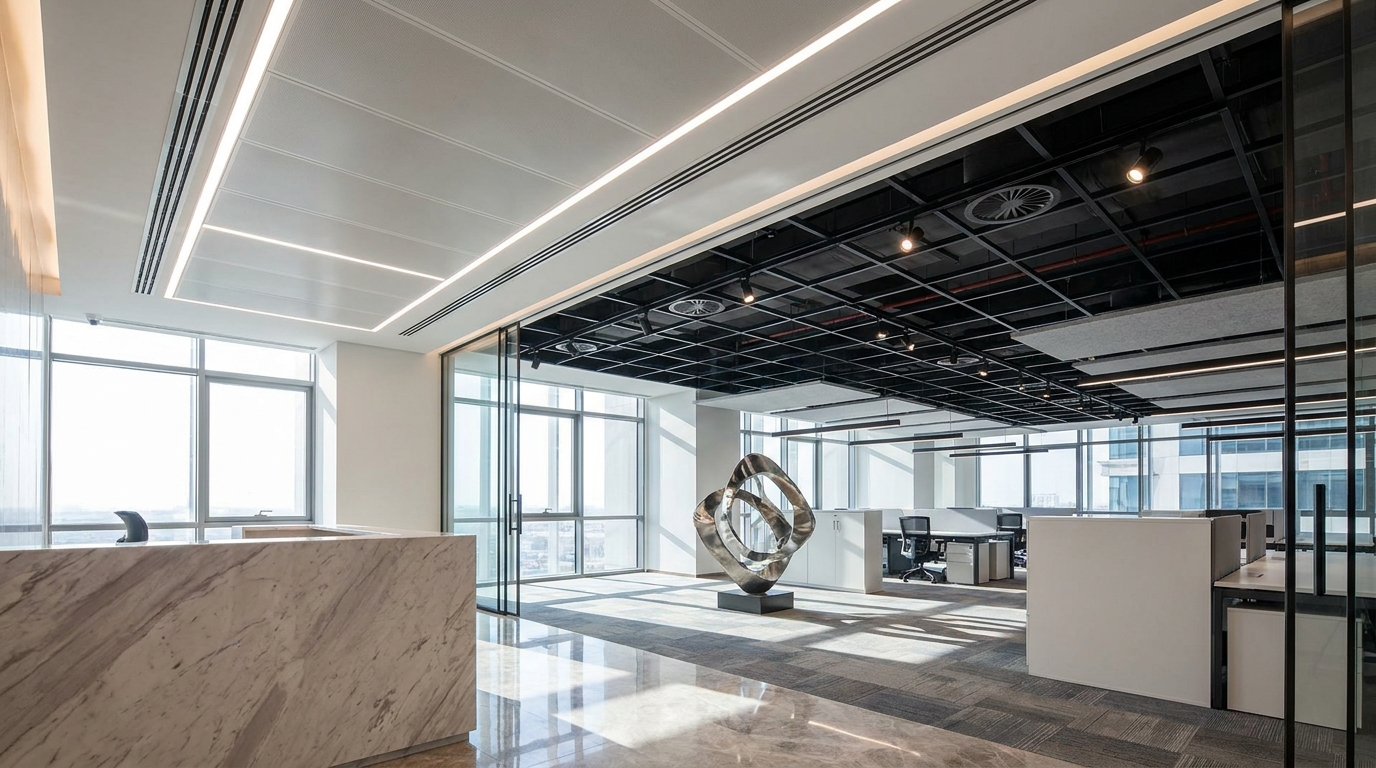
When specifying a suspended ceiling system for a project in the UAE, one of the earliest decisions you will make is whether to use an exposed or concealed T-grid system. Both systems use a metal grid to support ceiling tiles, but the way the grid relates to the finished ceiling surface is fundamentally different.
That difference affects the visual outcome, the installation process, the cost, and how easy the ceiling is to maintain over time.
How a Suspended T-Grid Ceiling Works
Before examining the difference between the two systems, it helps to understand what they have in common. Both exposed and concealed T-grid ceilings are suspended from the structural slab above using hanger wires and a framework of main runners and cross tees. The grid is set at the desired ceiling height, and tiles are placed into or onto the grid to form the finished ceiling surface.
The grid carries the weight of the tiles and any light fittings, diffusers, or access panels integrated into the ceiling. The structural slab carries the weight of the grid through the hangers. This system allows the ceiling to be set at any height below the slab, creating a void above for mechanical, electrical, and plumbing services.
What Is an Exposed T-Grid Ceiling?
In an exposed T-grid ceiling, the metal grid is visible from below once the tiles are in place. The flanges of the main runners and cross tees sit beneath the tiles and can be seen as a regular pattern of lines across the ceiling surface. This is the classic suspended ceiling appearance most commonly associated with commercial offices, retail spaces, and institutional buildings.
The tiles used in an exposed grid system are lay-in tiles. They rest on the flanges of the grid under gravity and can be lifted out from below without any tools. This makes access to the ceiling void straightforward, which is one of the main practical advantages of an exposed T-grid system.
Exposed grid systems are available in standard 24mm wide grid profiles, which are the most common type used across UAE commercial projects, and in narrow 15mm profiles that give a more refined appearance while still keeping the grid visible. The 15mm narrow reveal grid is sometimes specified in higher-specification office fit-outs where the designer wants the practical benefits of an exposed system with a less industrial visual finish.
What Is a Concealed T-Grid Ceiling?
In a concealed T-grid ceiling, the grid is hidden above the tile level so it cannot be seen from below. The finished ceiling surface appears as a continuous plane of tiles with no visible grid lines. This gives the ceiling a cleaner, more seamless appearance that is often preferred in hospitality projects, high-end office interiors, healthcare facilities, and retail environments where the visual finish is a priority.
The tiles used in a concealed grid system are clip-in or snap-in tiles. They attach to the grid from below using clips or flanges that lock the tile onto the grid member. Because the tile covers the grid completely, the connection must be made from below during installation and released using a special tool when access is needed.
The concealed grid itself is typically a narrower, inverted T or Z-shaped profile that the tile clips onto. The tile edge covers the grid flange, leaving no metal visible from below. Some concealed systems use a different structural approach where the tile is supported on hidden clips rather than a traditional T-grid, but the visual result is the same.
Exposed vs Concealed Ceiling UAE: Visual Differences
The visual difference between the two systems is the most immediately obvious distinction. An exposed T-grid ceiling has a modular, gridded appearance. The regular pattern of grid lines across the ceiling is a defining feature of the look. In many commercial settings in the UAE, this appearance is entirely acceptable and fits the functional aesthetic of the space.
A concealed grid ceiling presents a smooth, uninterrupted surface. Without visible grid lines, the ceiling reads as a single plane, which tends to feel more refined and less industrial. In spaces where the ceiling design is an important part of the interior concept, this difference matters significantly.
For exposed vs concealed ceiling decisions in UAE projects, the choice is often guided by the building type and the tier of finish being delivered. Standard commercial office fit-outs, schools, and functional retail spaces typically use exposed grids. Hotels, premium offices, healthcare facilities, and high-end retail environments more often specify concealed systems. Learn how hospitals and healthcare facilities select ceiling systems based on hygiene, acoustic performance and maintenance requirements in our healthcare ceiling systems guide.
If your project is an office fit-out, our guide on What Type of Ceiling System is Best for Offices in Abu Dhabi & Dubai explains where exposed T-grid systems, concealed ceilings, gypsum ceilings, and aluminium ceiling systems are best applied throughout modern office spaces.
Lay-In vs Clip-In Ceiling System UAE: Installation Differences
The installation process for both systems follows the same basic sequence of fixing hangers, setting main runners, and installing cross tees. The difference comes at the tile installation stage.
For a lay-in vs clip-in ceiling system comparison in the UAE context, lay-in tiles are significantly faster to install. The tile is simply placed into the grid opening from below and rests on the flanges. No tools are needed, and no mechanical connection is made. An experienced installer can place a large number of tiles quickly, which keeps installation labor costs lower on exposed grid projects.
Clip-in tiles require more time per tile. Each tile must be aligned with the grid and clipped into position, which involves more handling and care. The process is slower, and installers need to be familiar with the specific clip mechanism of the system being used. This adds to the installation labor cost for concealed grid projects, which is one reason why concealed ceiling systems tend to cost more overall than exposed systems.
Access and Maintenance Considerations
In UAE commercial buildings, the ceiling void is used to route air conditioning ducts, electrical conduits, data cables, sprinkler pipes, and other services. All of these services may need to be accessed at some point during the life of the building for maintenance, modifications, or fault-finding.
An exposed T-grid ceiling gives unrestricted access to the void above. Any tile can be lifted out in seconds without tools, giving immediate access to the space above. This is a significant practical advantage in buildings with complex or frequently accessed services.
A concealed grid ceiling requires a tool to release the clip-in tiles, and in some systems, the process of removing and replacing tiles carries a risk of damaging the tile edge or the clip mechanism if not done carefully. For this reason, concealed ceiling systems are often used in combination with dedicated access panels installed at locations above known service points, reducing the need to remove standard tiles for routine maintenance.
For projects in the UAE where the ceiling void contains equipment that requires regular access, the ease of access offered by an exposed grid system is a practical consideration that sometimes overrides the visual preference for a concealed finish.
Regardless of whether an exposed or concealed system is selected, projects in coastal and high-moisture environments should use humidity-resistant ceiling tiles in UAE to ensure long-term durability and performance.
Cost Differences Between the Two Systems
Exposed T-grid ceiling systems are generally less expensive than concealed systems on a per square meter basis. The grid components for an exposed system are simpler and less expensive to manufacture. The lay-in tiles used with exposed grids are also typically less expensive than the clip-in tiles designed for concealed systems. Installation labor is lower because of the faster tile placement process.
Concealed grid systems carry a premium across all three cost elements. The grid profile is more complex, the tiles require more precise manufacturing to achieve the seamless finish, and installation takes longer. For large ceiling areas, this cost difference can be substantial.
When budgeting a project in the UAE, it is worth getting a square meter rate for both systems so the cost difference can be weighed against the visual and practical requirements of the space. In some cases, a hybrid approach is used where concealed ceilings are specified in client-facing areas and exposed grids are used in back-of-house spaces to manage overall cost.
Which System Is Right for Your Project?
The right choice between an exposed and concealed T-grid ceiling in the UAE depends on four factors: the visual finish required, the frequency of access needed to the ceiling void, the project budget, and the type of tiles being specified.
If the project is a standard commercial office, school, healthcare facility, or functional retail space where practical access and cost efficiency matter more than a seamless finish, an exposed T-grid system with lay-in tiles is the appropriate choice. If the project is a hotel, premium office, high-end retail environment, or any space where the ceiling is part of a carefully considered interior design, a concealed grid system with clip-in tiles will deliver the finish required.
For a broader overview of ceiling selection factors including acoustics, fire ratings, tile materials, ceiling height, and budget considerations, read our guide on How to Choose the Right Ceiling System for a Commercial Project in UAE.
Environmental conditions should also influence your decision. Read How Does Humidity Affect Ceiling & Drywall Installation in UAE Climate to learn how humidity impacts ceiling performance in UAE buildings.
Conclusion
The difference between exposed and concealed T-grid ceiling systems in the UAE comes down to what is visible from below, how the tiles connect to the grid, how easily the ceiling void can be accessed, and what the overall cost will be. Both systems are widely used across the UAE, and both have clear applications where they perform best.
GTI supplies exposed and concealed T-grid ceiling systems, along with lay-in and clip-in tiles, for projects across the UAE.
If you are deciding between the two systems or need to confirm product specifications for an upcoming project, contact our team for guidance and to check current stock availability. Contact Form
Frequently Asked Questions
- What is the main difference between exposed and concealed T-grid ceiling systems in the UAE?
In an exposed T-grid ceiling, the metal grid is visible from below as a pattern of lines between the tiles. In a concealed T-grid ceiling, the grid is hidden above the tile surface, giving a smooth, uninterrupted ceiling appearance. The choice between them affects the visual finish, access to the ceiling void, and the overall project cost. - Which is easier to install, a lay-in or clip-in ceiling system in the UAE?
A lay-in ceiling system is faster and easier to install because the tiles simply rest on the grid flanges without any mechanical connection. Clip-in tiles for concealed grid systems take longer to install because each tile must be individually clipped into position. This difference in installation time affects overall labor costs on UAE projects. - Can I access the ceiling void easily with a concealed T-grid ceiling?
Access to the ceiling void through a concealed grid ceiling requires a release tool to unclip the tiles, and repeated removal can risk damaging the tile edges or clip mechanism. For this reason, dedicated access panels are usually installed at key service points in concealed ceiling systems used in UAE buildings. - Is an exposed or concealed ceiling system more cost-effective for UAE projects?
Exposed T-grid ceiling systems are generally more cost-effective. The grid components, tiles, and installation labor all cost less than their concealed grid equivalents. Concealed systems carry a premium that is justified by the superior visual finish they deliver in high-specification environments such as hotels, premium offices, and upscale retail spaces.
- Is an exposed T-grid ceiling suitable for a hotel or hospitality project in the UAE?
Exposed T-grid ceilings are generally not specified for hotels and hospitality projects in the UAE because the visible grid lines do not meet the finish standard expected in those environments. - Can exposed and concealed T-grid ceiling systems be used together on the same project in the UAE?
Yes, using exposed grids in back-of-house areas and concealed grids in client-facing spaces is a common approach on UAE commercial projects to manage cost while delivering the right finish where it matters. - What tile materials are compatible with a concealed T-grid ceiling system in the UAE?
Concealed T-grid systems in the UAE are compatible with aluminium clip-in tiles, gypsum tiles, and specialty acoustic tiles manufactured with the edge profile required to clip onto the concealed grid. - Does a concealed T-grid ceiling affect the acoustic performance of the space in the UAE?
The grid type alone does not determine acoustic performance. What matters is the NRC rating of the tile being used, which applies equally to exposed and concealed grid systems. - How do I know which T-grid ceiling system is specified for my project in the UAE?
The ceiling system type will be indicated on the reflected ceiling plan and in the interior finish schedule provided by the project architect or interior designer. - Are concealed T-grid ceiling systems harder to repair after damage in the UAE?
Yes, replacing damaged clip-in tiles in a concealed system requires more care than replacing lay-in tiles in an exposed grid, and sourcing exact replacement tiles can be difficult if the original product is no longer stocked locally.