July 03, 2026
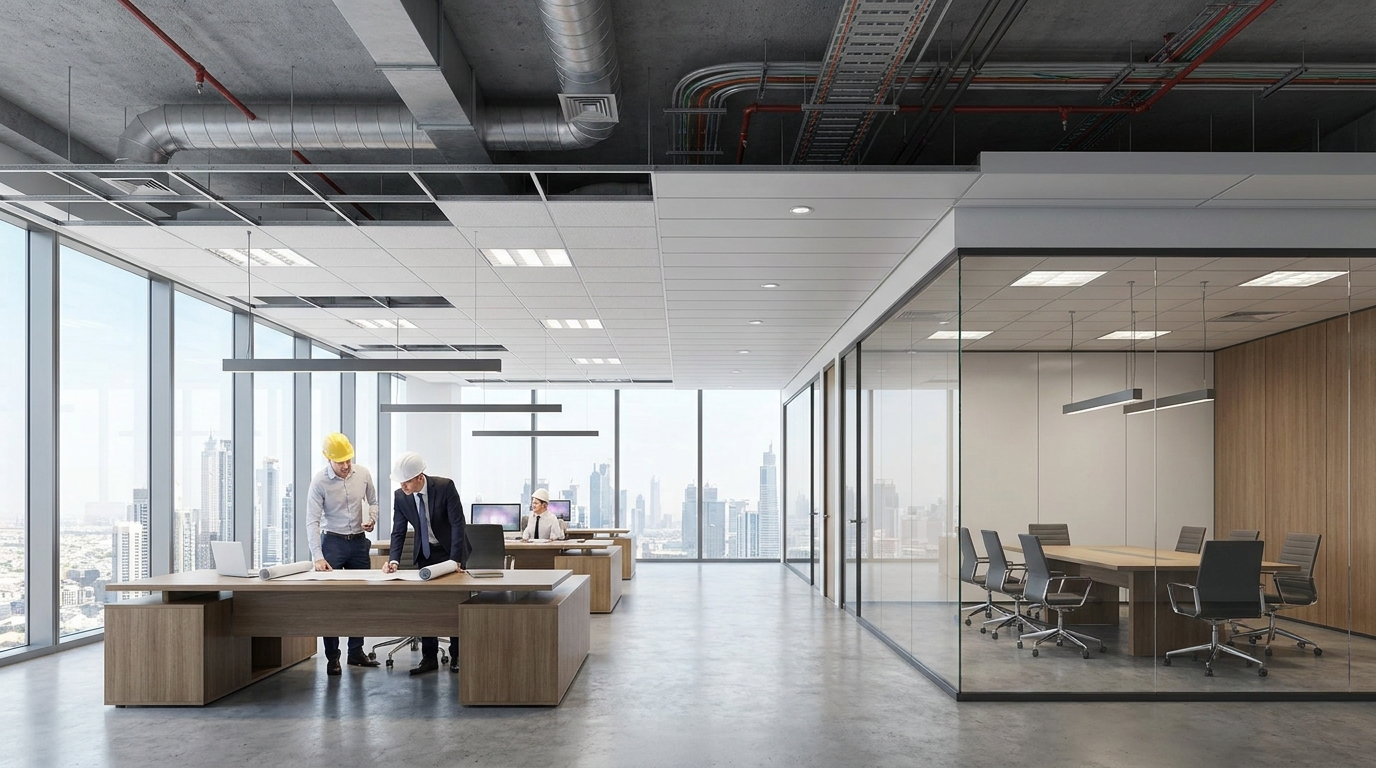
Choosing the right ceiling system for a commercial project in the UAE is one of those decisions that affects almost everything else. For example, the acoustic performance of the space, the ease of access to services above, the visual finish, the fire rating, the installation timeline, and the overall budget.
Getting it right from the start saves time, money, and the kind of rework that delays project handover.
This guide walks through the key factors that should drive ceiling selection on commercial projects across the UAE, from offices and retail spaces to healthcare facilities and hospitality projects.
Start With the Project Brief and Building Type
The starting point for any ceiling selection in the UAE is the project brief. What is the building used for? Who will occupy it? What finish standard is expected? These questions shape every decision that follows.
A standard commercial office fit-out has different ceiling requirements than a five-star hotel corridor. A school classroom has different acoustic demands than a retail showroom. A hospital ward has hygiene and infection control requirements that a corporate boardroom does not. The building type and its intended use define the performance envelope that the ceiling system needs to meet before any other criteria are applied. For healthcare-specific requirements, read our guide on the best ceiling systems for hospitals and healthcare facilities in UAE.
In the UAE, commercial projects also need to comply with Civil Defence requirements and local authority regulations, which may dictate minimum fire resistance ratings for ceiling assemblies in certain locations. These requirements are not optional and need to be understood before a ceiling system is selected.
For a detailed breakdown of ceiling options specifically for workplace environments, read our guide on What Type of Ceiling System is Best for Offices in Abu Dhabi & Dubai, where we compare ceiling systems for open-plan offices, meeting rooms, reception areas, and executive spaces.
Understand the Acoustic Requirements of the Space
Acoustic performance is one of the most important functional criteria for ceiling selection in commercial projects. In spaces where people work, communicate, or receive services, noise levels directly affect comfort, productivity, and, in some cases, privacy.
The Noise Reduction Coefficient, or NRC, is the standard measure of how much sound a ceiling tile absorbs. For open-plan offices, a ceiling with an NRC rating of 0.70 or above is generally recommended. Meeting rooms and private offices may need higher ratings if speech privacy is a concern. Classrooms, healthcare consultation rooms, and hospitality spaces each have their own acoustic targets that the ceiling specification needs to address.
Mineral fibre ceiling tiles are the most common acoustic solution used in commercial projects across the UAE. They are available in a wide range of NRC ratings, are compatible with standard T-grid systems, and are cost-effective for large ceiling areas. For higher-specification projects where both acoustic performance and visual finish matter, perforated metal tiles with acoustic backing are also used.
If an acoustic consultant is involved in the project, work from their NRC targets. If not, use the building type guidelines as a reference and select a tile with an NRC rating appropriate to the space.
Assess the Fire Rating Requirements
Fire resistance is a non-negotiable requirement for ceiling systems in UAE commercial buildings. Civil Defence and Dubai Municipality regulations specify where fire-rated ceiling assemblies are required and what performance level they must achieve.
In most commercial buildings, ceilings in escape corridors, stairwells, and areas above fire-rated partitions need to meet specific fire resistance ratings. The ceiling assembly, including the grid, tiles, and any insulation, must be tested and certified to the required standard. Changing any component of a tested assembly can invalidate the fire rating.
When selecting a ceiling system, confirm whether a fire-rated assembly is required for the location and what rating applies. Standard mineral fibre tiles have some inherent fire resistance due to their non-combustible composition, but a certified fire-rated assembly is a different requirement and needs specific products installed in a specific configuration.
For projects in the UAE where Civil Defence approval is required, having the fire rating documentation for the ceiling assembly ready before inspection avoids delays and potential instructions to replace non-compliant installations.
Consider Ceiling Height and Void Depth
The available void depth between the structural slab and the finished ceiling height is a practical constraint that affects which ceiling systems can be used and how services can be routed above the ceiling.
In UAE commercial buildings, particularly in older stock or buildings with tight floor-to-floor heights, the void above the ceiling may be limited. A standard suspended T-grid ceiling requires a minimum void depth to accommodate the hanger length, the grid depth, and the services running above. If the void is very shallow, certain grid systems or tile thicknesses may not be suitable.
Ceiling height also affects the visual proportion of the space. In large open-plan offices or retail environments with high floor-to-floor heights, a generous ceiling void allows more services to be accommodated and gives the designer more flexibility in setting the finished ceiling level. In compact spaces, every centimeter of ceiling height matters.
Confirm the available void depth early in the design process and use it as a constraint when evaluating ceiling system options.
Evaluate Access Requirements for Services Above the Ceiling
In UAE commercial buildings, the ceiling void carries a significant volume of services. Air conditioning ducts, electrical conduits, data cabling, fire suppression pipes, and other building services all run above the ceiling and need to be accessed periodically for maintenance, modifications, and fault-finding.
The frequency and ease of access required are key factors in choosing between an exposed T-grid system with lay-in tiles and a concealed grid system with clip-in tiles.
An exposed T-grid ceiling with lay-in tiles allows any tile to be lifted out in seconds without tools. This makes it the practical choice for buildings where ceiling void access is frequent or where the services above are complex. The trade-off is that the grid is visible from below, which gives the ceiling a more functional, commercial appearance.
A concealed grid ceiling with clip-in tiles hides the grid for a cleaner visual finish, but requires a release tool to remove tiles and carries a risk of tile damage if tiles are removed repeatedly. Dedicated access panels should be installed at service point locations to reduce the need to disturb standard tiles.
For most standard commercial office fit-outs in the UAE, an exposed T-grid system offers the best balance of practicality and cost. For hospitality, premium retail, and high-specification office projects where the ceiling finish is part of the interior design concept, a concealed system is more appropriate despite the higher cost and more restricted access.
To better understand the practical and visual differences between these two approaches, read our guide on What Is the Difference Between Exposed and Concealed T-Grid Ceiling in UAE, which compares appearance, installation, maintenance requirements, and project costs.
T-Grid vs Clip-In Ceiling UAE: Making the Right Call
The T-grid vs clip-in ceiling decision in UAE projects is essentially the exposed vs concealed grid decision reframed around the tile connection method. It is worth understanding what drives the cost and performance difference between these two approaches.
A standard exposed T-grid system uses 24mm or 15mm wide grid profiles that are visible from below. Lay-in tiles rest on the grid flanges and can be any compatible tile type, including mineral fibre, aluminium, and gypsum tiles. The system is fast to install, easy to access, and cost-effective at scale.
A clip-in system uses a concealed grid profile that the tile snaps onto from below. The tile covers the grid completely. Installation takes longer per tile and requires more care to achieve a flat, consistent finish. The tiles themselves are more precisely manufactured to achieve the seamless appearance. All of this adds to the cost compared to a standard T-grid system.
The right call depends on where the ceiling is going and who will see it. Client-facing areas, reception spaces, and premium environments warrant the investment in a clip-in concealed system. Back-of-house areas, plant rooms, storage spaces, and functional office areas are better served by a standard exposed T-grid.
Match the Tile Material to the Environment
The tile material needs to suit the environmental conditions of the space it will be installed in. Using the wrong tile material in the wrong environment leads to premature deterioration, failed inspections, or expensive replacement work.
Mineral fibre tiles are suitable for standard interior conditions with normal temperature and humidity levels. They are not suitable for areas with high moisture, such as changing rooms, commercial kitchens, or spaces adjacent to external openings. For these areas, humidity-resistant mineral fibre tiles or aluminium tiles should be specified instead.
Aluminium ceiling tiles are durable, moisture-resistant, and non-combustible. They are a good choice for areas where hygiene, durability, or moisture resistance is important. They are also used in high-specification environments where the visual finish and longevity of the ceiling are priorities.
Gypsum ceiling tiles offer a smooth, plaster-like finish and are used where a more traditional ceiling appearance is required. They are heavier than mineral fibre and aluminium tiles and require a suitably rated grid system to carry the additional load.
For UAE projects in coastal locations or buildings with high ambient humidity, confirm the moisture resistance rating of any tile being specified before ordering.
For projects located in humid environments, it is important to understand which ceiling tiles are best for high humidity areas in UAE, as moisture resistance directly affects ceiling lifespan, appearance, and maintenance requirements.
Before selecting ceiling materials, it’s worth understanding how the UAE climate affects long-term performance. Read How Does Humidity Affect Ceiling & Drywall Installation in UAE Climate for practical guidance on moisture-resistant specifications.
Factor in Maintenance and Longevity
A ceiling system that is difficult or expensive to maintain will create problems over the life of the building. Consider how the ceiling will be cleaned, how tiles will be replaced if damaged, and whether replacement tiles will be readily available from the UAE market in future years.
Standard mineral fibre tiles and aluminium tiles in common sizes are widely stocked in the UAE. Replacing a damaged tile is straightforward and inexpensive. Custom sizes, special finishes, or tiles from manufacturers without strong UAE distribution may be harder to source for replacements later.
For long-term commercial tenancies or owner-occupied buildings, selecting a ceiling system with good local availability and a track record of consistent product quality reduces the maintenance burden over time.
Budget Considerations for Ceiling Selection in the UAE
Budget is always a factor in ceiling selection, and in UAE commercial projects, the ceiling can represent a significant portion of the overall fit-out cost, particularly on large floor plates.
As a general guide for the best ceiling system for commercial projects in the UAE at different budget levels, exposed T-grid systems with standard mineral fibre tiles represent the most cost-effective solution. Mid-range budgets may allow for narrow reveal exposed grids with higher NRC tiles or aluminium lay-in tiles. Premium budgets can accommodate concealed clip-in systems with high-specification tiles and custom finishes.
The ceiling selection should be made in the context of the overall fit-out budget. In some projects, spending more on the ceiling in client-facing areas and less in back-of-house areas is a practical way to manage cost while delivering the right finish where it matters most.
Get square meter rates for the shortlisted ceiling systems early in the design process so budget decisions can be made before the specification is finalized. Changing the ceiling system after procurement begins is expensive and disruptive.
Coordination With MEP and Structural Disciplines
Ceiling selection does not happen in isolation. The ceiling system needs to be coordinated with the mechanical, electrical, and plumbing disciplines and with the structural engineer before the specification is finalized.
MEP coordination determines the void depth required above the ceiling, the location of diffusers, grilles, sprinkler heads, and light fittings, and the access requirements for services above. All of these affect which ceiling system can be used and how the grid layout needs to be planned.
Structural coordination is relevant where the ceiling carries unusual loads, such as heavy light fittings, feature elements, or acoustic baffles suspended from the ceiling grid. The hanger fixing method also needs to be confirmed with the structural engineer, particularly in post-tensioned slabs where shot-fired fixings may not be permitted.
Building this coordination into the early stages of ceiling selection avoids clashes and last-minute specification changes on site.
Conclusion
Knowing how to choose the right ceiling system for a commercial project in the UAE requires a structured approach that weighs acoustic performance, fire resistance, access requirements, tile material, visual finish, and budget against the specific demands of the building and the space.
There is no single correct answer that applies to every project. The right ceiling system is the one that meets the performance requirements of the space, suits the environmental conditions, fits the budget, and can be installed and maintained efficiently over the life of the building.
GTI supplies a full range of ceiling systems for commercial projects across the UAE, including exposed and concealed T-grid systems, mineral fibre and aluminium tiles, acoustic products, and fire-rated ceiling assemblies.
If you are in the specification or procurement stage of a commercial ceiling project, contact our team to discuss your requirements and get the right products moving to your site. Contact form
Frequently Asked Questions
- How do I choose the right ceiling system for a commercial project in the UAE?
Start by identifying the acoustic, fire rating, access, and visual finish requirements of the space, then match a ceiling system and tile type that meets all of those criteria within the project budget. - What is the best ceiling system for commercial projects in the UAE?
There is no single best system for all projects. Exposed T-grid with mineral fibre tiles suits most standard commercial spaces, while concealed clip-in systems are better for premium environments where visual finish is a priority. - What NRC rating should I specify for an office ceiling in the UAE?
For open-plan offices, an NRC rating of 0.70 or above is generally recommended, with higher ratings considered for meeting rooms or spaces where speech privacy is important. - Do commercial ceilings in the UAE need to be fire-rated?
Fire-rated ceiling assemblies are required in specific locations such as escape corridors, stairwells, and areas above fire-rated partitions, with the required rating depending on the building type and Civil Defence regulations. - What is the difference between a T-grid and a clip-in ceiling system in the UAE?
A T-grid system uses an exposed grid with lay-in tiles that rest on the grid flanges, while a clip-in system uses a concealed grid that the tile snaps onto from below, hiding all grid lines for a cleaner visual finish. - Which ceiling tile material is best for humid areas in UAE commercial buildings?
Humidity-resistant mineral fibre tiles or aluminium ceiling tiles are the appropriate choice for areas with elevated moisture levels, as standard mineral fibre tiles can sag and deteriorate in humid conditions. - How does ceiling void depth affect ceiling system selection in the UAE?
Available void depth determines how much space is available for hangers, grid components, and services above the ceiling, which directly limits which ceiling systems and tile thicknesses can be used in that location. - Can I use the same ceiling system throughout a commercial building in the UAE?
Using the same system throughout is possible but not always practical, as different areas of a building often have different acoustic, fire rating, access, and finish requirements that are better served by different ceiling specifications. - How do I coordinate ceiling selection with MEP services on a UAE project?
Ceiling selection should be confirmed alongside MEP coordination to establish the required void depth, diffuser and light fitting locations, access panel positions, and hanger fixing method before the grid layout is finalized. - How does the budget affect ceiling system selection for commercial projects in the UAE?
Budget determines the tier of ceiling system that is viable, with exposed T-grid and standard mineral fibre tiles being the most cost-effective option and concealed clip-in systems with premium tiles representing the higher end of the cost range.