July 01, 2026
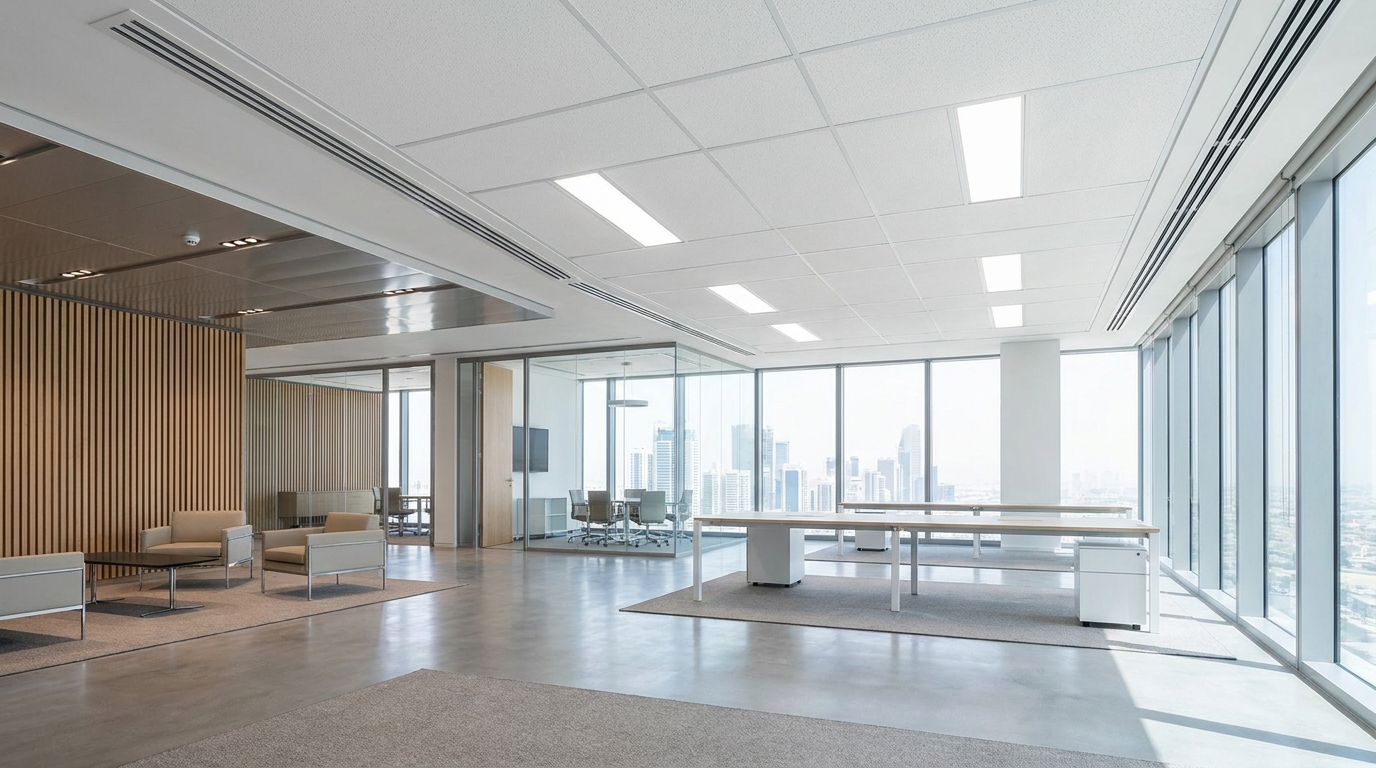
The ceiling system in an office does more than cover the space above. It affects how quiet the office is, how the lighting performs, how easy it is to access services above, and how the space looks to clients and employees walking in. For offices in Abu Dhabi and Dubai, where commercial fit-out standards are high and building regulations are specific, choosing the best ceiling system is a decision that deserves careful thought early in the project.
Why Office Ceiling Selection Matters in the UAE
Office buildings in Abu Dhabi and Dubai range from standard commercial towers to premium grade-A developments where the fit-out quality is part of the building’s market positioning. The ceiling system contributes directly to three things that matter in any office environment: acoustic comfort, lighting efficiency, and the overall visual finish.
Beyond aesthetics, UAE offices must comply with Civil Defence fire safety requirements, which may specify minimum fire resistance ratings for ceiling assemblies depending on the building type and location within the floor plate. The ceiling system selected must meet these requirements as a baseline before any other criteria are applied.
Since office spaces are one type of commercial project, it’s also worth understanding the broader selection criteria. Our guide on How to Choose the Right Ceiling System for a Commercial Project in UAE explains how factors like fire ratings, acoustics, maintenance, ceiling height, and budget influence ceiling selection across different commercial environments.
The Most Common Office Ceiling Types in the UAE
There are several office false ceiling types used across UAE commercial projects. Each has a different performance profile, cost point, and visual outcome.
Exposed T-grid ceilings with mineral fibre lay-in tiles are the most widely used ceiling system in standard commercial offices across Abu Dhabi and Dubai. The grid is visible from below, tiles rest on the grid flanges, and the ceiling void can be accessed by lifting any tile without tools. This system is cost-effective, acoustically capable, and practical for buildings with complex services above the ceiling.
Concealed grid ceilings with clip-in tiles are used in higher-specification office environments where a seamless, gridless ceiling finish is required. The grid is hidden above the tile level, giving the ceiling a cleaner appearance. These systems cost more to install and take longer to access, but they deliver a finish that suits premium office interiors.
Aluminium clip-in ceiling systems offer durability and a refined appearance alongside moisture resistance. They are used in office lobbies, reception areas, and premium fit-outs where the ceiling is expected to maintain its appearance over a long period with minimal maintenance.
To understand why moisture resistance matters in the UAE, read our guide on How Does Humidity Affect Ceiling & Drywall Installation in UAE Climate.
Gypsum board ceilings, fixed directly to a metal frame or suspended on a separate grid, are used in offices where a plastered, painted finish is required. These are common in boardrooms, private offices, and corridors where a smooth, flat ceiling is part of the design intent.
If you’re deciding between exposed lay-in ceilings and premium concealed systems, read our detailed comparison of What Is the Difference Between Exposed and Concealed T-Grid Ceiling in UAE, where we explain installation, maintenance, appearance, and cost differences for UAE projects.
Acoustic Performance: The Most Critical Criterion for Open-Plan Offices
Open-plan offices in Abu Dhabi and Dubai generate significant ambient noise. Conversations, phone calls, keyboard activity, and air conditioning all contribute to a sound environment that, without proper ceiling treatment, quickly becomes uncomfortable and reduces productivity.
The best ceiling system for offices in the UAE from an acoustic standpoint is one that combines a high NRC-rated mineral fibre tile with a standard T-grid system. Mineral fibre tiles with NRC ratings of 0.70 and above are widely available in the UAE and are cost-effective for large open-plan floor plates.
For offices with partial-height partitions, the ceiling attenuation class of the tile also matters. Sound travels over partition tops and through the ceiling void to adjacent spaces. A tile with a good ceiling attenuation class rating reduces this sound transfer and improves speech privacy between neighboring work areas.
Fire Rating Requirements for Office Ceilings in Abu Dhabi and Dubai
Civil Defence requirements in both Abu Dhabi and Dubai specify fire performance criteria for ceiling assemblies in commercial buildings. In most office projects, ceilings in escape corridors and above fire-rated partitions need to be part of a tested and certified fire-rated assembly.
Standard mineral fibre tiles are non-combustible, which contributes to the fire performance of the ceiling assembly. However, a certified fire-rated ceiling system is a specific, tested configuration and requires the right combination of grid, tile, and any additional components specified in the test certificate.
When selecting a ceiling system for an office project in the UAE, confirm the fire rating requirement for each ceiling zone with the project consultant or Civil Defence approval drawings before finalizing the specification.
Modern Office Ceiling Solutions in Abu Dhabi: Beyond the Standard Grid
For premium office projects in Abu Dhabi and Dubai, modern office ceiling solutions go beyond the standard mineral fibre tile and T-grid combination. Several options are increasingly used in high-specification office fit-outs across the UAE.
Linear metal ceiling systems use long aluminium planks instead of square tiles to create a more contemporary ceiling aesthetic. These systems suit large open spaces such as reception areas, collaborative zones, and executive floors where the ceiling is part of the overall design statement.
Combination ceilings mix flat tile areas with feature elements such as acoustic baffles, pendant lighting zones, and exposed services sections. This approach is common in creative office environments and technology company fit-outs where the ceiling design reflects the brand character of the occupier.
Rafts and islands are suspended acoustic panels installed at intervals across an otherwise open ceiling. They are used where a full suspended ceiling is not required, but targeted acoustic treatment is still needed. These work well in office breakout areas and collaborative spaces.
Ceiling Selection for Different Office Zones
A single office floor plate typically contains several different zones, each with different ceiling requirements. Matching the ceiling system to the zone rather than applying one system throughout is a more considered approach that delivers better results.
Open-plan work areas benefit most from high NRC mineral fibre tiles in a standard exposed T-grid for acoustic performance and easy service access. Meeting rooms and private offices may warrant a concealed grid system or gypsum board ceiling for a more refined finish. Reception and client-facing areas are where premium ceiling solutions, such as aluminium clip-in systems or linear metal ceilings, make the most impact. Server rooms, print areas, and storage spaces can use basic exposed grid systems without compromise.
While office ceilings prioritize acoustics, appearance, and accessibility, healthcare facilities have additional hygiene and infection-control requirements. Learn more in our guide on Best Ceiling System for Hospitals and Healthcare Facilities in UAE, which covers ceiling solutions designed specifically for medical environments.
Practical Considerations: Access, Maintenance, and Lead Times
For office fit-outs in Abu Dhabi and Dubai, practical factors matter as much as performance and aesthetics. Office buildings have active services above the ceiling that need periodic access. The ceiling system should make that access as simple as possible without creating disruption to the occupants below.
Standard lay-in tiles in an exposed T-grid give the fastest and easiest access. Clip-in systems require more time and care. For large corporate offices with extensive MEP installations above the ceiling, the ease of access offered by a lay-in system is a practical advantage that should factor into the selection.
Lead times for ceiling materials in the UAE are generally short for standard products. Custom sizes, special finishes, and high-specification tile types may need to be ordered in advance, so confirm availability with your supplier before the installation program is set.
Offices located near the UAE coastline or in high-humidity environments should also consider moisture-resistant ceiling materials. Our guide on Which Ceiling Tiles Are Best for High Humidity Areas in UAE compares mineral fibre, stone wool, metal, PVC, and moisture-resistant gypsum ceiling systems for long-term durability.
Conclusion
The best ceiling system for offices in the UAE is not a single product but a considered match between the performance requirements of each space, the fire compliance obligations of the project, the acoustic targets of the fit-out, and the visual finish standard expected by the client. Standard exposed T-grid with high NRC mineral fibre tiles covers most of what a typical commercial office needs. Premium zones within the same floor plate may justify a higher-specification system where the investment in finish and performance is visible and valued.
GTI supplies ceiling systems for office fit-outs across Abu Dhabi and Dubai, including mineral fibre tiles, aluminium clip-in systems, T-grid components, and accessories.
Contact our team to discuss your office ceiling requirements and confirm product availability for your project timeline.
Frequently Asked Questions
- What is the best ceiling system for offices in the UAE? For most offices, an exposed T-grid system with high NRC mineral fibre tiles offers the best balance of acoustic performance, service access, fire compliance, and cost.
- What are the most common office false ceiling types used in the UAE? The most common types are exposed T-grid with mineral fibre tiles, concealed clip-in systems, aluminium lay-in or clip-in tiles, and gypsum board ceilings for plastered finishes.
- What NRC rating should an office ceiling tile have in Abu Dhabi or Dubai? For open-plan offices, an NRC rating of 0.70 or above is recommended to adequately reduce ambient noise levels across the floor plate.
- Do office ceilings in the UAE need to meet fire rating requirements? Yes, Civil Defence requirements in Abu Dhabi and Dubai specify fire performance criteria for ceiling assemblies in commercial buildings, particularly in escape corridors and above fire-rated partitions.
- What is the difference between a lay-in and clip-in ceiling tile for UAE offices? Lay-in tiles rest on an exposed grid and can be lifted out without tools, while clip-in tiles attach to a concealed grid and require a release tool for removal.
- Are concealed grid ceiling systems worth the extra cost for offices in Dubai? Concealed grid systems are worth the investment in client-facing and premium office zones where visual finish is a priority, but standard exposed grids are more practical and cost-effective for general work areas.
- What ceiling system works best for a reception area in an Abu Dhabi office? Aluminium clip-in systems or linear metal ceiling systems are the most suitable for reception areas where durability, visual finish, and a premium appearance are required.
- How does ceiling selection affect lighting efficiency in UAE offices? Tiles with high light reflectance values distribute artificial light more evenly across the space, which can reduce the number of fittings required and lower overall energy consumption.
- Can I use different ceiling systems in different zones of the same office in the UAE? Yes, specifying different ceiling systems for different zones within the same office is a common and practical approach that matches performance and finish to the specific requirements of each area.
- How far in advance should I order ceiling materials for an office fit-out in Abu Dhabi or Dubai? Standard mineral fibre tiles and T-grid components are typically available from stock in the UAE, but custom sizes, special finishes, and high-specification products should be ordered several weeks in advance to avoid delays.